
Learn to bake perfect Paul Hollywood croissants at home! This detailed recipe guides you through every step, from lamination to baking, with pro tips for flaky, golden perfection.
The Allure of the Croissant
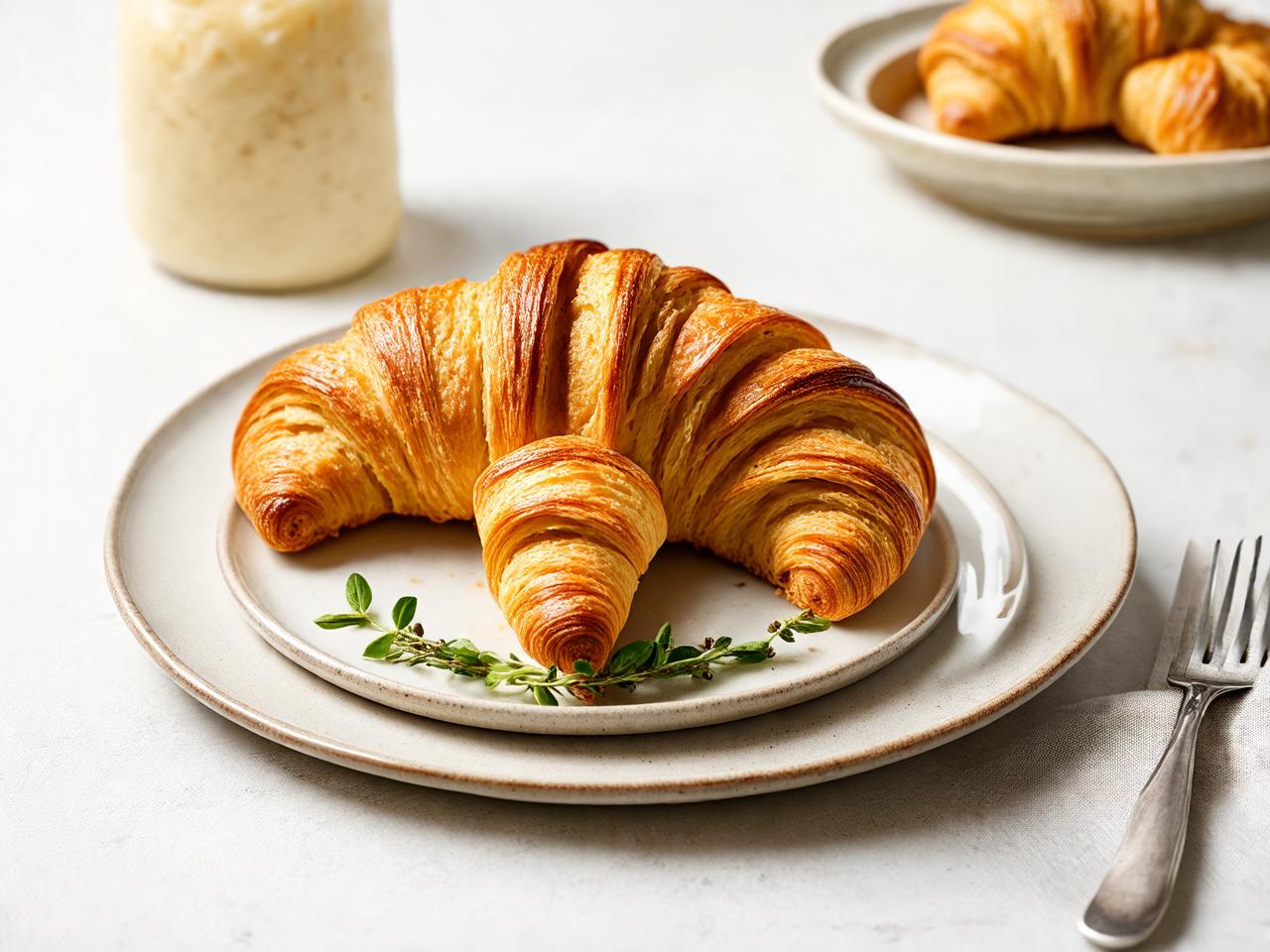
Croissants have been a staple of French patisserie for centuries, captivating bakers and pastry enthusiasts worldwide with their flaky, buttery layers and delicate, golden curves. The art of crafting these intricate pastries requires patience, precision, and a deep understanding of baking basics.
Paul Hollywood’s croissant recipe is a masterclass in achieving the perfect balance of texture and flavor. By employing a traditional laminating technique and using high-quality ingredients, you’ll be able to replicate the signature layers and crumb that have made these pastries a benchmark for excellence.
But what sets croissants apart from other baked goods is their unique history and cultural significance. From their origins as a humble breakfast food for French bakers to their current status as a revered pastry icon, croissants have evolved into a culinary symbol of sophistication and refinement.
In this recipe, we’ll delve into the world of Paul Hollywood Croissants, exploring the techniques and ingredients that make them truly special.
Recipe Card: Your Quick Reference
To make Paul Hollywood’s iconic croissants, gather the following ingredients and equipment:
- 500 g / 2.5 cups strong bread flour
- 10 g / 2 teaspoons salt
- 10 g / 2 teaspoons sugar
- 15 g / 1 tablespoon instant yeast
- 250 g / 1 cup unsalted butter, softened
- 120 ml / 0.5 cup whole milk
Required equipment includes a stand mixer, dough scraper, rolling pin, and baking sheets lined with parchment paper.
Baking Time and Yield
Estimated baking time is 15-20 minutes at 200 °C / 400 °F. This recipe yields approximately 12-15 croissants, depending on size and shape.
Key considerations: ensure the butter is at room temperature and the dough is kept cool during the proofing process to achieve the signature layers and flaky texture.
Plan ahead, as this recipe requires a significant time commitment, including multiple rises and rests.
Quality Matters: Ingredients for Perfect Croissants
Crafting truly exceptional croissants hinges on the quality of your ingredients. Each component plays a crucial role in achieving that signature flaky, buttery texture and delicate flavor.
- Strong Bread Flour (240g / 2 cups): Look for a high-protein flour (around 12-14%) that develops strong gluten strands, essential for the croissant’s structure.
- Butter (170g / 6.5 oz): Unsalted, high-fat butter is key. European-style butter, with its higher fat content, yields the best results.
- Milk (120ml / ½ cup):** Use full-fat milk for richness.
- Sugar (20g / 1.5 tbsp):** Provides a touch of sweetness and helps activate the yeast.
- Instant Yeast (5g / 1 packet):** Ensure your yeast is fresh for optimal rising.
- Salt (5g / 1 tsp):** Enhances flavor and controls yeast activity.
Optional Ingredients
- Egg Yolk (1):** Brushing the croissants with an egg yolk before baking creates a beautiful golden-brown crust.
While substitutions can be made, keep in mind that using the specified ingredients will yield the most authentic and delicious Paul Hollywood croissants.
A Step-by-Step Guide to Making Paul Hollywood’s Flaky Croissants
Master the art of lamination and shaping to create the perfect, buttery croissants. Follow these steps to achieve a golden, flaky crust and a tender interior.
Stage 1: Preparing the Dough (Total Time: 1 hour 30 minutes)
- Combine 500g / 2 1/4 cups bread flour, 10g / 2 teaspoons salt, and 10g / 2 teaspoons sugar in a large mixing bowl.
- Gradually add 325g / 1 1/3 cups warm milk (around 37°C / 98.6°F) to the dry ingredients, mixing until a shaggy dough forms.
- Add 20g / 1/4 cup unsalted butter, softened, and continue mixing until the dough comes together in a sticky ball.
- Rest the dough in the refrigerator for 1 hour, covered with plastic wrap.
Stage 2: Laminating the Dough (Total Time: 2 hours)
- Roll out the rested dough to a thickness of 1 cm / 1/3 inch (around 22°C / 72°F).
- Spread 120g / 4 1/2 ounces unsalted butter, softened, evenly over the dough, leaving a 2.5 cm / 1 inch border around the edges.
- Fold the dough in half lengthwise, like a letter, to create the first layer of lamination.
- Rotate the dough 90°, so the folded edge is facing you, and roll out to a thickness of 1 cm / 1/3 inch (around 22°C / 72°F).
- Repeat the folding and rolling process 3 more times, for a total of 4 laminations.
Stage 3: Shaping the Croissants (Total Time: 1 hour)
- Roll out the laminated dough to a thickness of 1 cm / 1/3 inch (around 22°C / 72°F).
- Use a pastry cutter or a knife to cut the dough into long, thin triangles.
- Roll each triangle into a croissant shape, curling the ends towards the center.
- Place the shaped croissants on a parchment-lined baking sheet, leaving about 2.5 cm / 1 inch of space between each one.
Stage 4: Proofing and Baking the Croissants (Total Time: 2 hours)
- Proof the croissants in a warm, draft-free place for 1 hour, or until they have doubled in size (around 25°C / 77°F).
- Preheat the oven to 200°C / 392°F (with a rack in the middle position).
- Bake the croissants for 15-20 minutes, or until golden brown.
- Remove the croissants from the oven and let them cool on a wire rack for 10 minutes before serving.
By following these steps, you’ll be able to create flaky, buttery croissants that are sure to impress. Remember to be patient and gentle when handling the dough, as it’s essential for achieving the perfect lamination and shape.

Pro Tips: Elevating Your Croissants
To achieve the perfect texture, flavor, and appearance in Paul Hollywood’s croissant recipe, it’s essential to focus on proofing, baking, and troubleshooting common issues. A key factor is maintaining the right temperature, ideally between 20°C / 68°F and 24°C / 75°F, during the proofing process.
Proofing and Baking
- Ensure the dough is proofed for the correct amount of time, as underproofing can lead to a dense croissant, while overproofing can cause it to collapse.
- Bake the croissants in a preheated oven at 200°C / 400°F for 15-20 minutes, or until they are golden brown.
- Use egg wash to brush the croissants before baking, as this will enhance the golden color and provide a delicate sheen.
Troubleshooting
Common issues with croissants include a dense texture and poor flakiness. To avoid these, make sure to keep the butter cold and handle the dough gently to prevent the layers from merging. If the croissants are not rising, check the yeast expiration date and ensure the proofing environment is not too cold.
By following these pro tips and being mindful of common pitfalls, you’ll be well on your way to creating flaky, golden croissants that rival those of a professional bakery.
Adapting the Recipe: Ingredient Substitutions
This Paul Hollywood Croissant Recipe yields beautiful, flaky pastries. But we know everyone has different dietary needs and preferences. So, let’s explore some ingredient swaps to make this recipe work for you.
Gluten-Free Baking
For a gluten-free version, replace the all-purpose flour with a 1:1 gluten-free baking flour blend. This will mimic the texture of traditional flour. Keep in mind that gluten-free pastries might not be as airy as their gluten-containing counterparts.
Dairy-Free Delight
Swap the butter for a vegan butter alternative. Many brands offer excellent substitutes that bake similarly to dairy butter. You can also use shortening for a more neutral flavor. If using shortening, you might find the croissants are slightly less flaky.
Vegan Variations
To make this recipe vegan, replace the milk with a plant-based milk alternative like almond milk, soy milk, or oat milk. Ensure the milk is unsweetened for best results.
Optional Additions
- For a touch of sweetness, add 1 tablespoon of sugar to the dough.
- A pinch of salt enhances the flavor of the dough.
Remember, baking is a science, and substitutions can sometimes impact the final product. Don’t be afraid to experiment and adjust the recipe to your liking!
Exploring New Flavors: Variations on the Classic Croissant Recipe
Take the classic croissant recipe to the next level by introducing new flavors and textures. From sweet treats to savory delights, we’ve got you covered.
Sweet Variations
- Chocolate Croissants: Add 100g (3.5 oz) dark chocolate chips or chopped chocolate to the dough for an indulgent treat. Bake at 200°C (400°F) for 15-20 minutes.
- Raspberry Almond Croissants: Fold in 100g (3.5 oz) raspberry jam and 50g (1.8 oz) sliced almonds into the dough for a fruity twist. Bake at 190°C (375°F) for 18-22 minutes.
Savory Variations
- Spinach and Feta Croissants: Mix in 50g (1.8 oz) chopped spinach and 50g (1.8 oz) crumbled feta into the dough for a savory delight. Bake at 200°C (400°F) for 15-20 minutes.
- Garlic and Herb Croissants: Add 2 cloves minced garlic and 1 tsp dried herbs to the dough for a flavorful twist. Bake at 190°C (375°F) for 18-22 minutes.
Storage: Keeping Croissants Fresh
To maintain the freshness of baked croissants, store them in an airtight container at room temperature (20°C / 68°F) for up to 2 days. For longer storage, place them in the fridge (4°C / 39°F) for 5-7 days or freeze at -18°C / 0°F for 2-3 months.
- Room temperature: 2 days
- Fridge: 5-7 days
- Freezer: 2-3 months
Troubleshooting: Common Croissant Issues
Even the most experienced bakers can run into a few snags when making croissants. But don’t worry, these common issues often have simple solutions.
Flat Croissants
- Problem: Your croissants are spreading too much and not rising properly.
- Possible Causes: Too much gluten development, insufficient chilling time, or too high oven temperature.
- Solution: Handle the dough gently, ensure thorough chilling between folds, and bake at a slightly lower temperature (190°C / 375°F).
Tough Croissants
- Problem: Your croissants are dense and chewy instead of light and flaky.
- Possible Causes: Overworking the dough, insufficient kneading, or not allowing enough time for fermentation.
- Solution: Knead the dough just until smooth, proof the dough thoroughly, and avoid over-baking.
Nutrition Information: A Glance at the Facts
This Paul Hollywood Croissant Recipe provides an estimate of the nutritional values per serving.
- Per serving (1 croissant):
- Calories: approximately 240-260 kcal (°C: 120-130, °F: 248-266)
- Fat: 14-15g (18-20% of the daily value)
- Carbohydrates: 25-28g (8-9% of the daily value)
- Protein: 4-5g (8-10% of the daily value)
This recipe does not cater to specific dietary requirements such as gluten-free (GF), dairy-free (DF), or vegan. Please note that nutritional values may vary based on ingredient choices and portion sizes.
- What temperature should the ingredients be at? Ensure all ingredients, including the butter, are at room temperature (around 20°C / 68°F) before starting.
- How much yeast is required? The recipe calls for 10 g / 2 teaspoons of active dry yeast.
- Why is it essential to keep the dough cold? Maintaining a cold dough (around 4°C / 39°F) is crucial to prevent the butter from melting and to achieve the signature layers in the croissants.
- How long does the proofing process take? The dough should be proofed in a warm, draft-free place at 25°C / 77°F for approximately 1-2 hours, or until it has doubled in size.
- Can I freeze the croissants before baking?
- What if my dough is too sticky?

Key Takeaways: Mastering the Art of Croissants
Baking perfect croissants takes patience and precision, but the reward is a golden, flaky masterpiece. This recipe, inspired by Paul Hollywood, breaks down the process into manageable steps, guiding you towards croissant success.
- Dough Development: The secret to flaky croissants lies in the dough. We’ll use a high-protein flour and incorporate butter through a specific folding technique to create hundreds of delicate layers.
- Chill Time: Multiple chilling periods are crucial. They allow the butter to solidify, preventing it from melting into the dough and ensuring those beautiful layers remain distinct.
- Gentle Handling: Avoid overworking the dough. Use a light touch when rolling and shaping to prevent tough croissants.
- Proofing Patience: Allow the dough to rise slowly in a warm environment. This develops flavor and creates a light, airy texture.
- Baking Bliss: Bake the croissants in a hot oven to encourage browning and flakiness.
With these tips and the detailed instructions in the full recipe, you’ll be well on your way to baking croissants that rival those found in your favorite Parisian bakery.
Enjoy Your Homemade Croissants!
With the Paul Hollywood Croissant Recipe, baking croissants at home is now achievable. The satisfaction of creating delicious, flaky homemade croissants is unparalleled. Try this recipe to experience croissant baking success. Share your results and explore related recipes to further develop your skills.